
Linton Hall Resident Lookup Records
A person can have several legitimate record trails in Linton Hall, but each trail answers a narrower question. Prince William County holds the local property and Circuit Court material because Linton Hall is an unincorporated CDP, not a city with its own clerk or assessor. Start with the type of relationship that needs confirmation. A parcel card can identify an assessed owner, a court docket can identify a party in a case, and a vital record can establish a qualifying relationship or event. Combining those distinct facts is more reliable than treating a name match as a complete resident profile.
| Record | What It Confirms | Where | Access |
|---|---|---|---|
| Assessment card | Named assessed owner, mailing address, situs address, GPIN, legal description, and sale data | Prince William Public Access | Public portal; not occupancy proof |
| Circuit docket | Named party, case activity, hearing, and available disposition | Virginia Circuit Court Information System | Public categories, with clerk fallback |
| Vital certificate or index | Covered birth, death, marriage, or divorce event | Prince William Health District | Age-based opening and eligibility rules |
| Voter status | A person’s own registration, precinct, and displayed history | Virginia Citizen Portal | Self-check only; lists restricted |
| Business or license record | Entity, agent, credential, or professional affiliation | SCC CIS and DPOR | Public fields with record-specific limits |
When the only starting fact is an address, use the assessment record to identify the parcel and its assessed owner. When the starting fact is a name, add a compatible place, date, party role, or GPIN before moving to another index. That habit keeps a Linton Hall resident lookup focused on an evidence question instead of a broad name sweep.
Set a Linton Hall Name Question
Write down what the result must establish before searching. “Who owns this parcel?” is an assessment and deed question. “Was this person a party in a local matter?” is a court question. “Can I confirm my own registration status?” belongs in the election portal. A former address or family connection may lead to probate, obituary, cemetery, or historical-directory work instead. Postal labels can read Manassas, Bristow, or Gainesville even when the geography under review is Linton Hall, so Prince William County is the useful jurisdiction filter.
Keep an evidence ledger with the exact name searched, the date range, the geography, the source date, the result, and what the result does not prove. Middle initials, spouse names, estate labels, trusts, and legal descriptions can separate people with the same name. A non-match is not proof that a person never lived in Linton Hall. It may simply mean the relevant record is restricted, filed under another label, or held in a different collection.
Verify a Linton Hall Owner Record
The county assessment card is the useful first stop for a property relationship. It can tie a named assessed owner to the situs address, mailing address, GPIN, legal description, and sale history. The situs is the physical parcel location. The mailing address is where tax correspondence goes, and it can be outside the area or use a different postal city. Neither field establishes that the owner occupies the property, and an assessed-owner result does not identify every person who lives there.
Use the GPIN, formatted as a ten-digit xxxx-xx-xxxx parcel number, to bridge the assessment card to County Mapper and land-record notes. If a name or address needs correction, contact the custodian responsible for that specific field. A Virginia FOIA request can seek an existing public record from the proper office, but it does not require the county to create a new list of all residents.
Note: Preserve the assessment date because property, court, and historical records update on different schedules and should not be merged into a current-household claim.
Search Linton Hall Circuit Dockets
For a Prince William Circuit case, select Prince William County in the Circuit Court Information System, choose Criminal or Civil, then select Name, Case Number, or Hearing Date. County case information is online from at least July 1, 1989. Use several plausible spellings and compare the party role with the time and geography already established. The Virginia case-information entry point is useful for General District Court and selected Circuit paths, but it does not replace the local clerk or create a single complete statewide Circuit search.
| Portal control | How it helps verify a match |
|---|---|
| Circuit selection | Choose Prince William County Circuit before beginning. |
| Criminal or Civil | Select the separate case-category path that fits the matter. |
| Name | Search a party name and compare variants with role context. |
| Case Number | Use the local reference when known; county guidance uses uppercase CR or CL prefixes. |
| Hearing Date | Narrow a broad name result by calendar date when possible. |
Juvenile, adoption, sealed, and other protected matters are not shown in ordinary web results. A case hit is a name-indexed legal event, not proof of a current Linton Hall address. Verify a difficult result with the clerk rather than inferring identity from the name alone.
Linton Hall Court Hit Limits
A docket detail may provide enough information to distinguish one party from another, but remote access is not the full file. Use the case number link and available tabs, then compare each field with the independent identifiers in the research notes. A result can associate a person with an attorney, creditor, business, former spouse, or registered agent rather than the individual being researched.
- Court and locality: Prince William County Circuit, with the selected Criminal or Civil path.
- Party list: Indexed party names, roles, and the name-list tab.
- Hearing events: Hearing date, courtroom or case link, and available event status.
- Pleadings and orders: Listed filings where available, though some images remain unavailable remotely.
- Disposition and services: Detail fields and service status when the portal exposes them.
The counter is also the practical fallback for archived material. Quote the case number when asking about copies or a certified copy. The research did not identify one current fee schedule for archived case copies, so confirm it directly with the clerk.
Verify a Linton Hall Resident
A careful Linton Hall resident lookup uses at least two independent, time-compatible identifiers. Begin with the narrowest legitimate record, then test rather than repeat the match in a second source. Property ownership, a court party name, a vital event, and a credential can be connected facts, yet each has a different legal meaning. Do not substitute a mailing address for occupancy or a docket name for a present address.
- Record the exact name, a known place label, an approximate date, and any middle initial, spouse, estate, or trust detail.
- For a property question, check the assessment card and save the owner name, GPIN, situs, mailing address, legal description, and sale date.
- Search the Circuit portal by the name variants. Compare party role, case number, hearing date, division, and disposition with the first record.
- Use a vital, probate, license, or entity record only to corroborate the compatible relationship or date that it actually covers.
- Ask the issuing custodian for a certified copy or authorized file access when an official copy, rather than an index result, is required.
- Docket
- A court’s running case record, showing events and entries for one numbered matter.
- Index versus image
- An index points to a record and may show limited fields; an image is the scanned document or filing, if access is available.
- Certified copy
- A copy issued and authenticated by the record custodian for uses that require an official version.
Linton Hall Vital Record Gates
Virginia makes a birth record public 100 years after the event and a death, marriage, or divorce record public after 25 years under Va. Code §32.1-271. Before those openings, the certificate route is limited to the person, qualifying immediate family, legal guardian, or another requester with qualifying authority and valid identification. A public index is not the same thing as a certified certificate.
The Prince William Health District vital-record counter accepts requests for births and deaths from 1912 forward, marriages from 1853 forward, and divorces from 1918 forward. The local page lists a $15 search or copy fee and identifies the record, requester signature, valid ID, and relationship or authority as part of the request path. Pre-1912 birth requests route to Richmond. For a divorce decree itself, ask the courthouse that filed it.
The local vital-record counter’s application information is shown on the official source below.
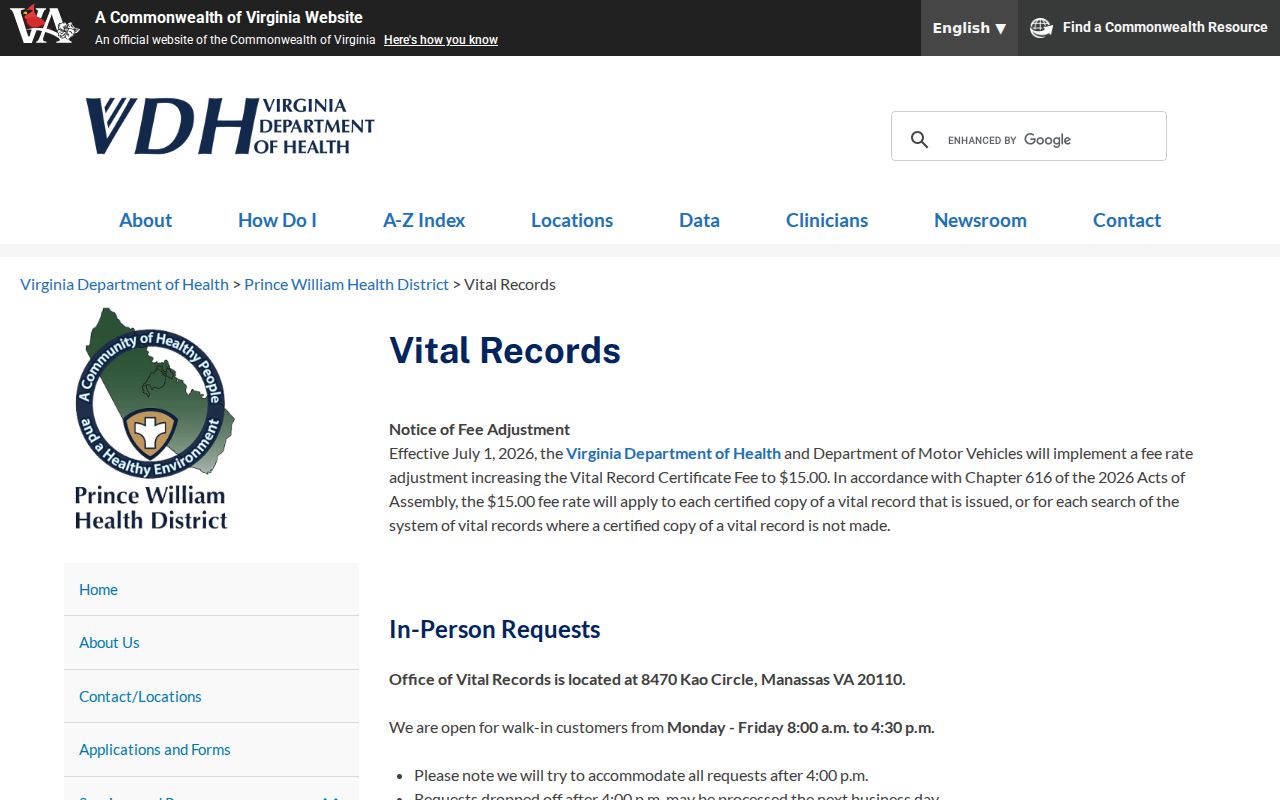
This counter route is for an eligible certificate request, not a name-only public resident search.
Linton Hall Voter Self-Check
The Virginia Citizen Portal is a self-status check. It requires the person’s current registration name, date of birth, last four Social Security number digits, locality, and certification. For Linton Hall, select Prince William County as the locality rather than treating Linton Hall as an incorporated city. A successful view can show registration status, polling place, election district, absentee status, and voting history. It does not show ballot choices.
The public web tool is not a name-and-street roster. Voter-list distribution is limited by Va. Code §§24.2-405 and 24.2-406, and recipients may not republish received lists as searchable databases. A voter non-match should be resolved with the local registrar, not interpreted as a conclusion about residence.
The official Citizen Portal’s self-check entry is shown on the linked source.
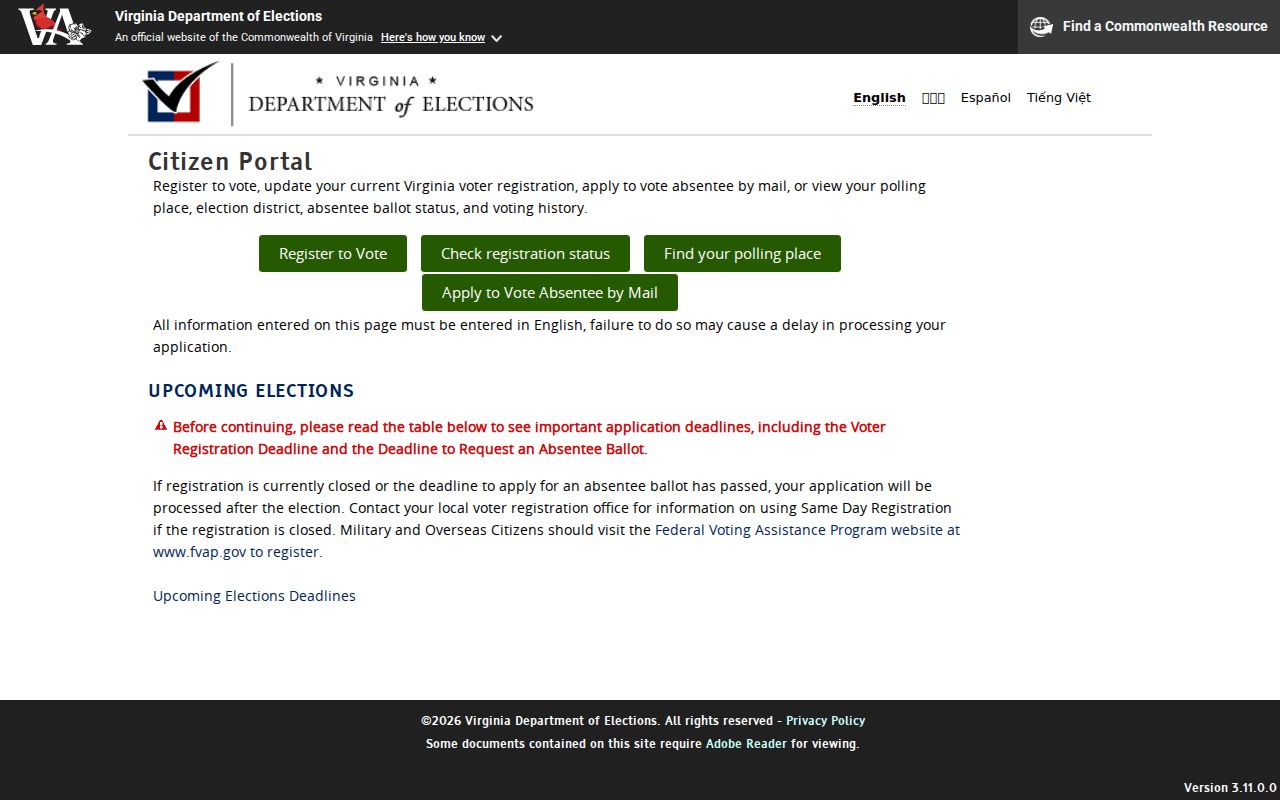
The protected input fields are an intentional boundary, not a shortcut to a public Linton Hall resident list.
Linton Hall License Connections
Business and professional registers can corroborate a connection, not residence. Virginia DPOR License Lookup accepts search text and offers advanced searching by name, number, address, or license type. Its public results can include license number, name, credential type, address, certification date, expiration, and status. Protected financial identifiers and some complaint material are not part of that public view.
The DPOR search screen is displayed on its official source below.
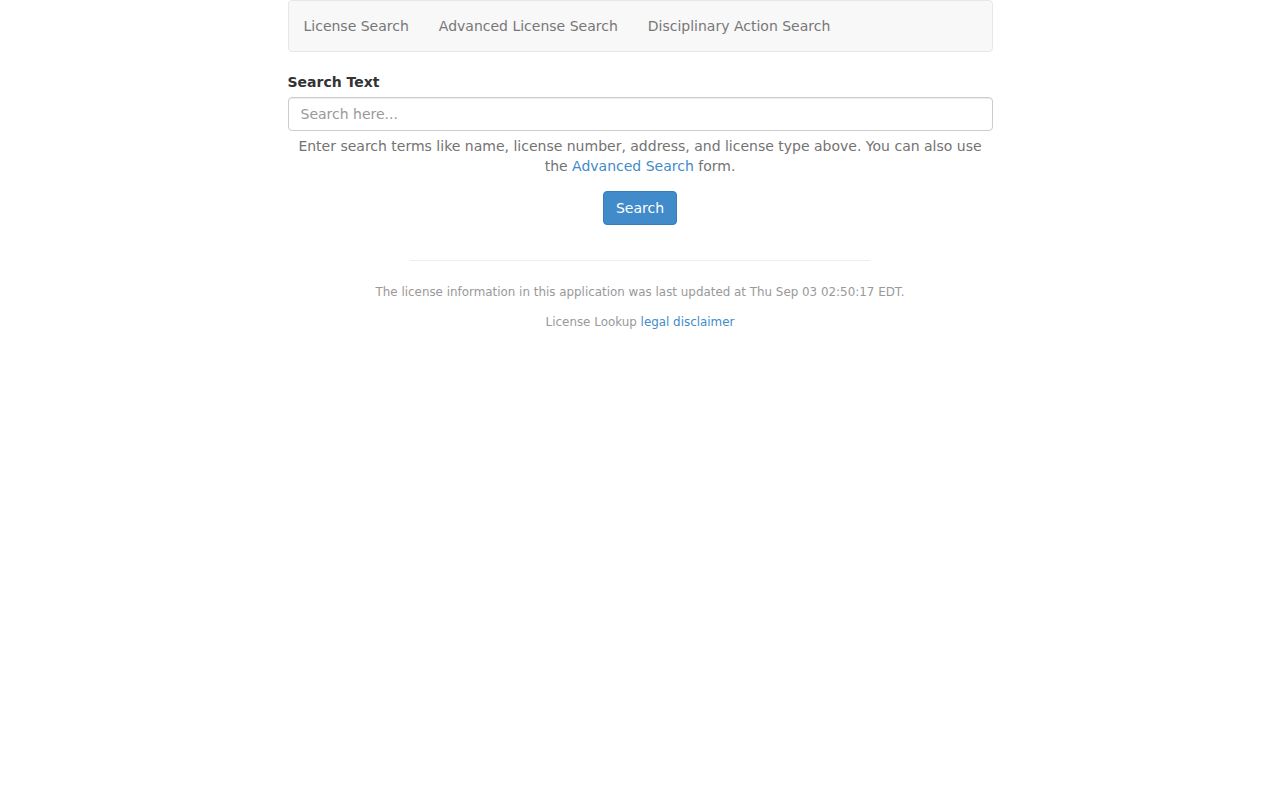
A credential at an address confirms a public licensing relationship at the shown time, not who currently lives there.
The State Corporation Commission Clerk’s Information System searches public entities by business name or SCC ID. Entity name, ID, type, registered-office address, formation date, status, and filings can connect an organization, agent, or office to local records. They do not establish a person’s home address.
The SCC entity search is displayed on its official source below.
Use the entity ID and filing date as separate evidence, then return to the appropriate county or state custodian for the question at hand.
Linton Hall Status Check Boundary
No public online Prince William County Adult Detention Center roster was located. For a current custody-status question, the Adult Detention Center directs callers to 703-792-6420. Staff can confirm only the stated current-status information, such as charges, bond, next court date, or release date if sentenced. They do not confirm juvenile or former-detainee information through this route.
The Adult Detention Center’s official public-information page is shown on the linked source.
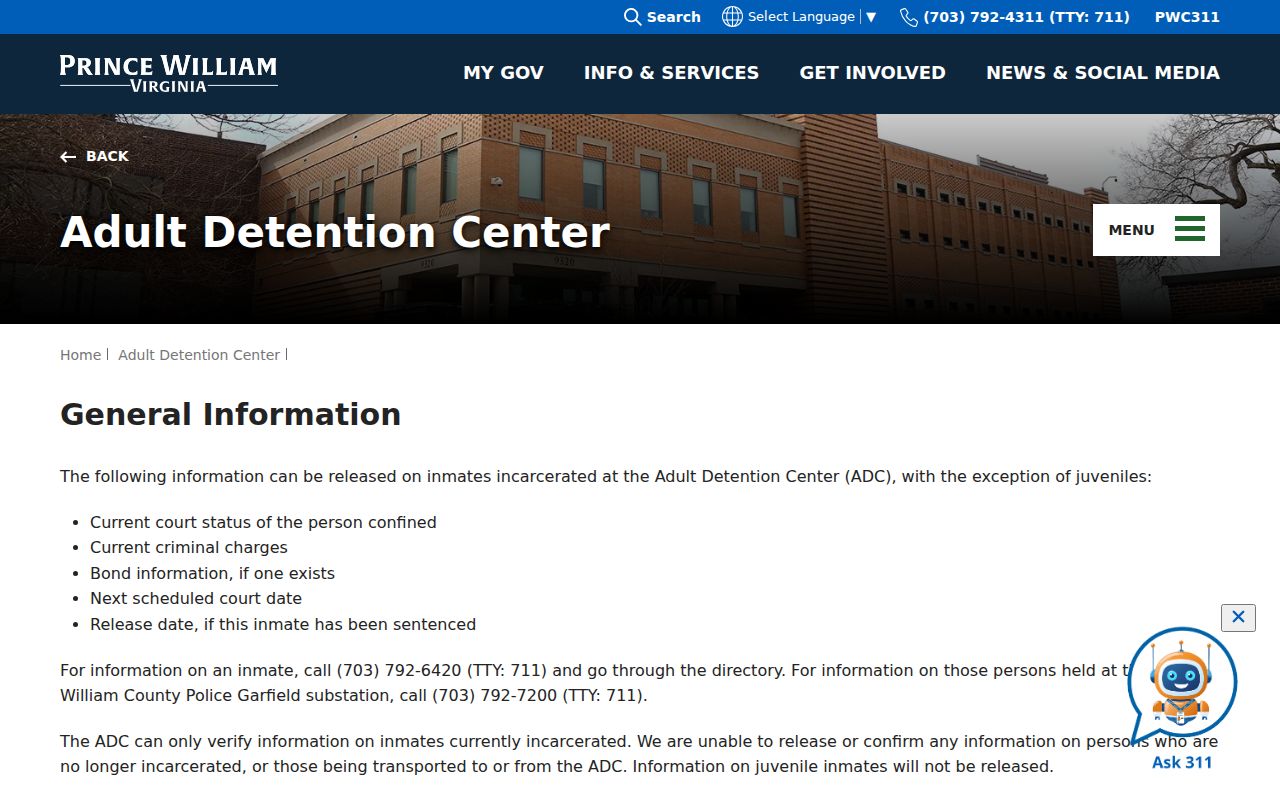
This narrow phone boundary is not a substitute for a court-file check or a general people search.
Linton Hall Resident Lookup Limits
Virginia privacy law is record-specific. The Address Confidentiality Program protects a qualifying participant’s actual address through a designated mailing address and forwarding agent under Va. Code §2.2-515.2. Court protection, sealed material, voter restrictions, and vital-record eligibility can separately limit access. A denial based on a protected address or sealed record is a legal outcome, not a missing-data problem.
The Virginia Consumer Data Protection Act, Va. Code §§59.1-571 through 59.1-581, provides rights against covered businesses. It does not erase public custodian records such as a recorded deed or require a court clerk to rewrite a historical index. For a factual error in an official record, ask that specific custodian about its correction, sealing, redaction, or confidentiality procedure. The county’s Virginia FOIA information also explains that requests concern existing records, not newly created resident lists.
Note: Retain the source date and ask the named custodian to verify any record before relying on it, since online portals and case status can change.